

A Rare Beauty in Danger: The Philippine Eagle on the Brink of Extinction
The Philippine eagle is one of the largest and most impressive birds of prey in the world. With a wingspan of up to two meters and its distinctive crest, it is considered a symbol of Southeast Asia’s tropical rainforests.
The species is found exclusively in the Philippines and is restricted to a few islands there. This strong dependence on a limited habitat makes the eagle particularly vulnerable to environmental changes. Deforestation, habitat loss, and illegal hunting, in particular, have drastically reduced populations in recent decades.
Experts estimate that only a few hundred birds remain in the wild today. Furthermore, the low reproduction rate complicates the conservation of the species: a breeding pair typically raises only one chick every two years.
The Philippine eagle thus symbolizes the threat to unique animal species posed by human interference—and highlights the urgent need for conservation measures to protect the last remaining populations.
The dedication of the people behind the program
For many years, the Philippine Eagle Foundation has been working to conserve this extraordinary species. In addition to conservation programs in the rainforests, the organization runs one of the world’s most important breeding programs for the Philippine eagle.
During a personal visit to the site, Nico Herth was able to see the foundation’s work for himself.
“What impressed me most were the people,” he reports. “You immediately sense the passion and sense of responsibility with which they work there. Many of the staff dedicate a large part of their lives to protecting this species.”
The teams’ work ranges from caring for the animals and monitoring the wild population to the labor-intensive rearing of the young birds.
“Behind every hatched chick are people who work with great patience and conviction to preserve this species,” says Herth. “This dedication deserves great respect.”
Support from the Vogelsberg
Procon Grumbach, a family-owned company based in Mücke in the Vogelsberg region, develops and manufactures incubation systems and technical solutions for veterinary medicine, research, and species conservation, among other applications.
For nearly 40 years, the company’s systems have been used worldwide in zoos, scientific institutions, and species conservation projects. Controlled artificial incubation plays a crucial role, particularly for rare and endangered bird species. It allows eggs to develop under stable and precisely controlled conditions, thereby increasing the chances that sensitive or endangered species will hatch successfully.
Modern incubation technology can make a significant contribution, particularly for species with very low reproduction rates, such as the Philippine eagle. It supports breeding programs in securing valuable clutches and successfully raising young birds.
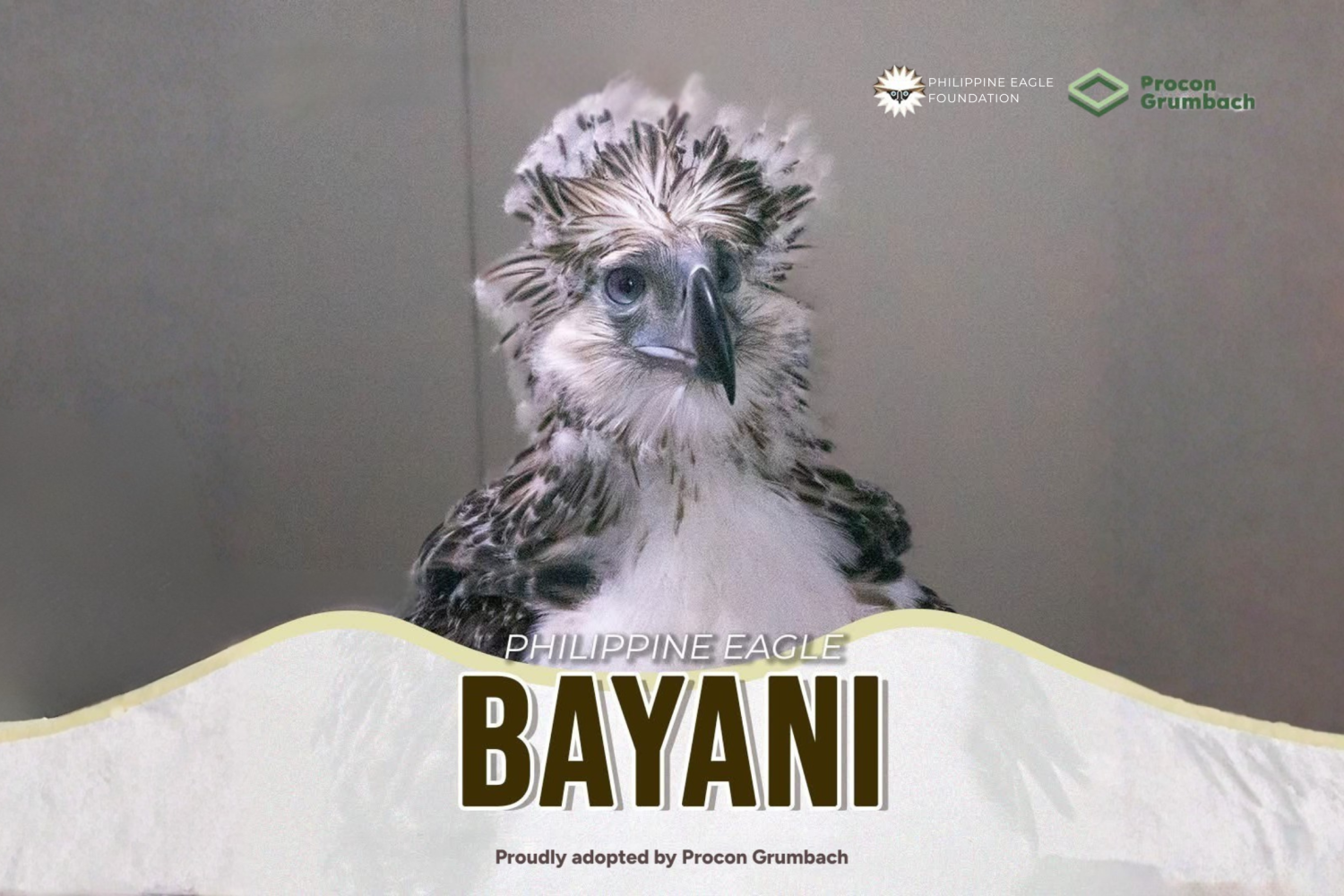
In 2024, the company provided several devices to support the foundation’s breeding programs. The adoption of the young bird Bayani is another example of this collaboration.
For brothers Nico and Kevin Herth, the protection of endangered species is a mission that transcends national borders.

A Name with Meaning
The name Bayani was chosen deliberately. In Filipino, the word means “hero” and traditionally refers to people who dedicate themselves to a greater cause with courage, responsibility, and devotion.
For the entrepreneurs from Hesse, the name represents the people who work behind the scenes every day to protect this extraordinary species. Because behind every successful breeding program and every hatched chick are numerous experts who often work for many years with great patience and dedication to conserve these rare eagles.
“Every Philippine eagle alive today is the result of extraordinary dedication,” says Herth. “The true heroes are the people behind the scenes—animal keepers, rangers, researchers, and conservationists who dedicate themselves every day with great passion to protecting this species.”
For Nico and Kevin Herth, the name Bayani therefore symbolizes not only the young eagle chick itself, but above all the people whose daily work and dedication ensure that this impressive species has a chance to survive in the future.
Hope for the Future
The birth of a Philippine eagle chick is considered a rare event among conservationists. Given the species’ reproductive challenges and the threats to its habitats, every chick represents a new hope.
For the Philippine Eagle Foundation, the chick named Bayani therefore represents not only the success of a breeding program, but also the hope that international attention and support will contribute to the long-term conservation of this impressive species.
For although the Philippine eagle is found only on the islands of the Southeast Asian archipelago, its story shows that the protection of biodiversity has long since become a global responsibility.